Collected works

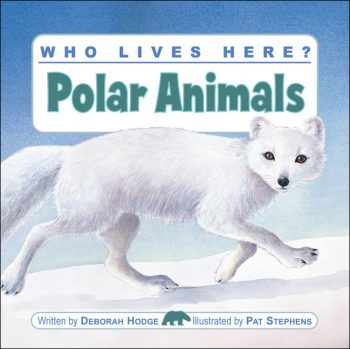
Polar Animals

polar animalsIllustrated by Pat Stephens; published by Kids Can Press

The polar regions are home to amazing animals whose bodies are built for living in the extreme cold. Emperor penguins, snowy owls and beluga whales all have special ways of staying warm, finding food and raising their young in a polar habitat of thick ice and snow.

Read about:
• The emperor penguin whose feathers cover it like a thick winter coat
• the arctic fox who uses its bushy tail like a scarf to stay warm
• The seal who swims and dives under the ice for most of the year

Who Lives Here?

This series looks at animals in their natural habitats – rain forests, polar regions, deserts and wetlands – and explains how the body and habits of each animal are suited to the place it lives. Charming, realistic illustrations, playful language and intriguing facts make these books a perfect read for young children.

“Realistic illustrations of polar animals…neatly presented…easily accessed facts and attractive pictures…” Booklist

polar animals

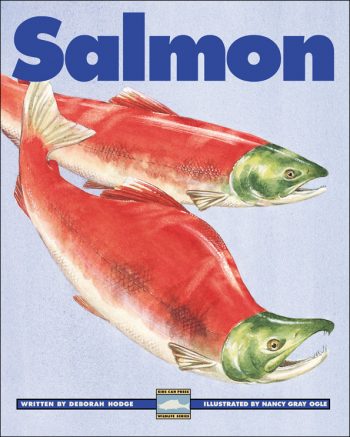
Salmon

salmonIllustrated by Nancy Gray Ogle; published by Kids Can Press.
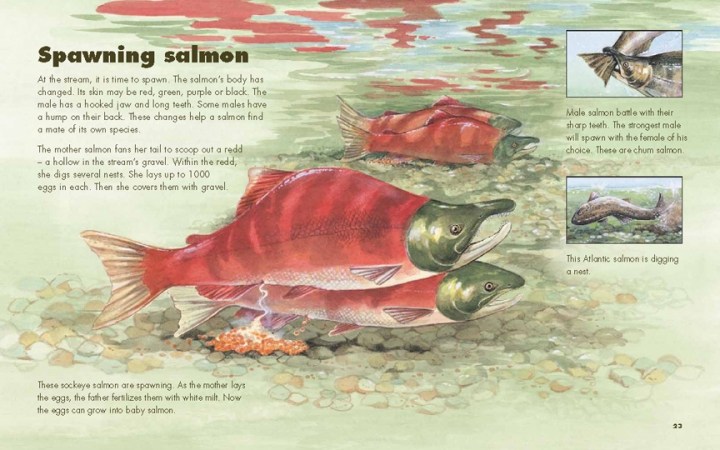
When salmon are ready to spawn, they struggle upstream to their birthplace. Their remarkable journey is just one of the twelve topics discussed in this look at Pacific salmon and Atlantic salmon. You’ll find out about different salmon species, the salmon life cycle, their place in the food chain and much more.

Did you know?
• salmon live in both fresh and salt water during their lifetime
• scientists can tell the age of a salmon by counting the rings on one of its scales
• some salmon lay up to 8000 eggs

Kids Can Press Wildlife Series

Easy-to-read text, well-organized information and beautiful illustrations make this series is an excellent choice for students doing their first research projects. Featuring North American animals, these books describe where an animal lives, what it eats and how it raises its young.

• Parents’ Choice Approval, U.S. Parents’ Choice Foundation
• Best Books for Children by Science Books and Films
• “Pick of the Lists” by American Bookseller
• Our Choice selection, Canadian Children’s Book Centre

“A very worthwhile resource book for the inquisitive elementary school student that deserves a place in every school and public library.” Science Books and Films

salmon

Eagles

eaglesIllustrated by Nancy Gray Ogle; published by Kids Can Press

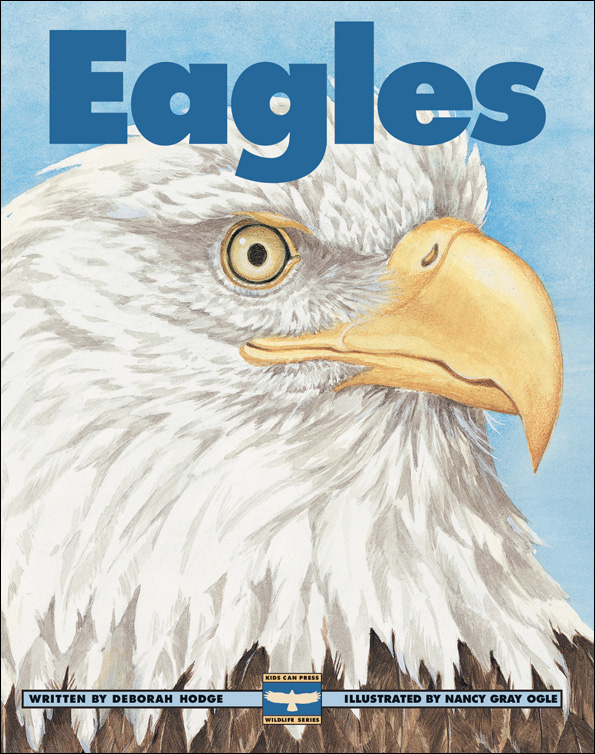
How eagles build their nests is just one of the 14 topics in this look at the two types of eagles found in North America — the bald eagle and the golden eagle. You’ll find out how eagles fly, what they eat, how they hunt, how they protect themselves and much more.

Did you know?
• eagles are the biggest birds of prey in North America
• a golden eagle has more than 7000 feathers
• that a bald eagle’s nest can be as tall as a house

Kids Can Press Wildlife Series

Easy-to-read text, well-organized information and beautiful illustrations make this series is an excellent choice for students doing their first research projects. Featuring North American animals, these books describe where an animal lives, what it eats and how it raises its young.

• Parents’ Choice Approval, U.S. Parents’ Choice Foundation
• Best Books for Children by Science Books and Films
• “Pick of the Lists” by American Bookseller
• Our Choice selection, Canadian Children’s Book Centre

“A well organized, attractive book that will capture the interest of primary age children. Highly recommended.” Resource Links

“Soar with our largest birds of prey in the latest book from the Kids Can Press Wildlife Series. Like the other excellent books in this series, Eagles reveals its subject both inside and out.” Alberta Naturalist

eagles

Deer, Moose, Elk and Caribou

deer, moose, elk and caribouIllustrated by Pat Stephens; published by Kids Can Press

Deer, moose, elk and caribou are all members of the deer family. In this book, you’ll find out what they eat, where they live, how they give birth and raise their young, why some migrate and much more.

Did you know?
• a moose’s antlers can weigh as much as an 11 year old child
• in a day, a moose can eat as much as 90 big salad bowls of greens
• a baby deer less than a week old can run faster than a human

Kids Can Press Wildlife Series

Easy-to-read text, well-organized information and beautiful illustrations make this series is an excellent choice for students doing their first research projects. Featuring North American animals, these books describe where an animal lives, what it eats and how it raises its young.

• Parents’ Choice Approval, U.S. Parents’ Choice Foundation
• Best Books for Children by Science Books and Films
• “Pick of the Lists” by American Bookseller
• Our Choice selection, Canadian Children’s Book Centre

“These books will provide clear, accessible information for young report writers.” School Library Journal

deer, moose, elk and caribou

Kids Book of Canadas Railway

The Kids Book of Canada’s Railway

Illustrated by John Mantha; published by Kids Can Press.

This is the story of Canada’s first transcontinental railway — the CPR, completed on November 7, 1885. It was one of the longest, most expensive, most challenging engineering feats in the world. This book tells the dramatic tale of the people who built, operated and rode the Canadian Pacific Railway. It documents the enormous challenges they faced and how the railway evolved over time to help shape the Canada we know today.

• Winner, Information Book Award, Children’s Literature Roundtables of Canada
• Our Choice starred selection, Canadian Children’s Book Centre
• Silver Birch Award, shortlist, Ontario Library Association
• Red Cedar Award, shortlist
• Alcuin Society Book Design Award, Honorable Mention

“This book is a blueprint for the successful Canadian history book for kids.” Times Colonist

“A book for fans either of Canadian history or trains. It documents the mammoth task of constructing a railway across an unknown and unfriendly terrain. It talks honestly about the issues involved and the consequences of the decisions made that still have ramifications today.” Canadian Materials Magazine

“Deborah Hodge, whose grandfathers worked for the CPR, communicates a real love of her topic.” St. Catherine’s Standard

Beavers

beaversIllustrated by Pat Stephens; published by Kids Can Press

How beavers dam ponds and build lodges are just two of 14 topics in this book. You’ll also find out what beavers eat, where they give birth, how they raise their young, how they protect themselves and much more.

Did you know?
• a beaver’s teeth never stop growing
• a beaver can stay underwater for up to 15 minutes
• some beaver dams are longer than a soccer field

Kids Can Press Wildlife Series

Easy-to-read text, well-organized information and beautiful illustrations make this series is an excellent choice for students doing their first research projects. Featuring North American animals, these books describe where an animal lives, what it eats and how it raises its young.

• Parents’ Choice Approval, U.S. Parents’ Choice Foundation
• Best Books for Children by Science Books and Films
• “Pick of the Lists” by American Bookseller
• Our Choice selection, Canadian Children’s Book Centre

“A superb example of a well-written information book for pre-readers and students in the early elementary grades. Highly recommended.” Canadian Materials Magazine

“Solid choices for homework assignments or to whet the appetites of young wildlife lovers.” Booklist

beavers

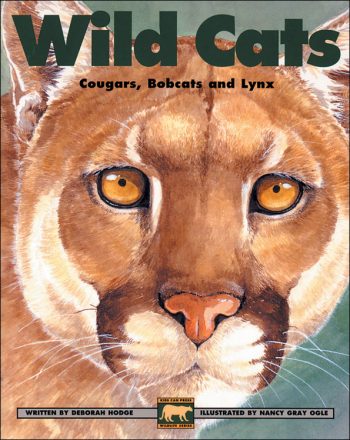
Wild Cats

cougars, bobcats and lynxIllustrated by Nancy Gray Ogle; published by Kids Can Press

The eating habits of wild cats is one of fourteen topics in this look at the three North American wild cats — cougars, bobcats and lynx. You’ll find out where wild cats live, how they give birth and raise their kittens, what they eat and much more.

Did you know?
• one lynx eats up to 200 snowshoe hares a year
• wild kittens purr like pet cats
• cougars are the biggest and fastest cats in North America

Kids Can Press Wildlife Series

Easy-to-read text, well-organized information and beautiful illustrations make this series is an excellent choice for students doing their first research projects. Featuring North American animals, these books describe where an animal lives, what it eats and how it raises its young.

• Parents’ Choice Approval, U.S. Parents’ Choice Foundation
• Best Books for Children by Science Books and Films
• “Pick of the Lists” by American Bookseller
• Our Choice selection, Canadian Children’s Book Centre

“A beautifully illustrated book.” Science Activities

cougars, bobcat and lynx

Wild Dogs

wolves, coyotes and foxesIllustrated by Pat Stephens; published by Kids Can Press.

This book introduces children to wolves, coyotes and foxes – the wild dogs of North America. Find out where wild dogs live, what they eat, and how they give birth and raise their young. Beautifully detailed illustrations give you a close-up look at how each species compares in size, movement and habitat.

Did you know?
• all the wolves in a pack help take care of the pups
• an Arctic fox’s white fur turns brown in the summer
• a wolf can run up to 60 km per hour

Kids Can Press Wildlife Series

Easy-to-read text, well-organized information and beautiful illustrations make this series is an excellent choice for students doing their first research projects. Featuring North American animals, these books describe where an animal lives, what it eats and how it raises its young.

• Parents’ Choice Approval, U.S. Parents’ Choice Foundation
• Best Books for Children by Science Books and Films
• “Pick of the Lists” by American Bookseller
• Our Choice selection, Canadian Children’s Book Centre

“Full of basic, interesting information which is tightly written and suitable for young fact finders.” Canadian Materials Magazine

wolves, coyotes and foxes

Whales

whalesIllustrated by Pat Stephens; published by Kids Can Press

This book takes a look at the many kinds of whales that live in the world’s oceans. You’ll find out where whales live, how they give birth and raise their young, how they find food, how they communicate, and much more.

Did you know?
• a newborn blue whale is as long as a school bus
• killer whales have sharp teeth for hunting prey
• belugas were once called sea canaries because of their loud chirping sounds

Kids Can Press Wildlife Series

Easy-to-read text, well-organized information and beautiful illustrations make this series is an excellent choice for students doing their first research projects. Featuring North American animals, these books describe where an animal lives, what it eats and how it raises its young.

• Parents’ Choice Approval, U.S. Parents’ Choice Foundation
• Best Books for Children by Science Books and Films
• “Pick of the Lists” by American Bookseller
• Our Choice selection, Canadian Children’s Book Centre

“Brief glossaries and more extensive indexes makes these good choices for young readers just beginning to use non-fiction.” School Library Journal

whales

Bears

bearsIllustrated by Pat Stephens; published by Kids Can Press

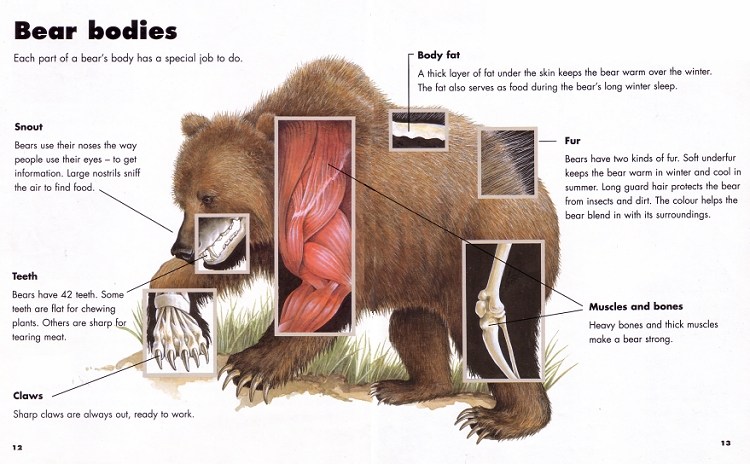
The eating habits of bears is one of 14 topics in this look at three North American bears — grizzly bears, polar bears and black bears. You’ll find out where bears live, how they give birth and raise their cubs, what they eat and much more.

Did you know?
• all bears can swim
• baby bears have blue eyes
• bears are related to dogs

Kids Can Press Wildlife Series

Easy-to-read text, well-organized information and beautiful illustrations make this series is an excellent choice for students doing their first research projects. Featuring North American animals, these books describe where an animal lives, what it eats and how it raises its young.

• Parents’ Choice Approval, U.S. Parents’ Choice Foundation
• Best Books for Children by Science Books and Films
• “Pick of the Lists” by American Bookseller
• Our Choice selection, Canadian Children’s Book Centre

“This series fills an important niche for early readers. Each attractively illustrated book focuses on a different type of wildlife and gives a simple overview of the creatures and their habits. The text is clear and easy to follow.” American Bookseller

“This well-designed volume … maintains a sense of visual calm and verbal continuity from one spread to the next … Handsome paintings illustrate this book effectively.” Booklist

bears