Collected works

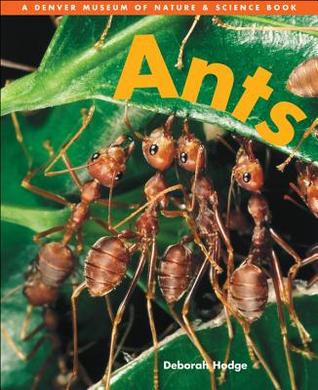
Ants

Illustrated by Julian Mulock; photographs from the Denver Museum of Nature & Science; published by Kids Can Press

With stunning photographs and simple activities, this book and (its companion Bees) will introduce budding entomologists to some remarkable insects.

Children can find out about the ant life cycle, ant bodies, and how a colony of ants lives and works together. Simple step-by-step instructions show kids how to build an ant nest out of modeling clay, or try a sense of smell experiment to learn how ants find food. (Check your library for a copy.)

• Our Choice List, starred selection, Canadian Children’s Book Centre

“A great starter series that will capture a beginning reader’s interest with its appealing presentation. Highly recommended.” Canadian Materials Magazine

“Well-designed, well thought-out, these will satisfy young listeners and encourage further research in slightly older kids.” Kirkus Reviews

“Full color close-ups bring kids literally face-to-face with bugs… A great way to bring a bit of the outdoors inside.” Booklist

Bees

Illustrated by Julian Mulock; photographs from the Denver Museum of Nature & Science; published by Kids Can Press

With stunning photographs and simple activities, this book and (its companion Ants) will introduce budding entomologists to some remarkable insects.

Children can find out about the bee life cycle and bee bodies, how bees live and work together, and how they “talk” to one another. Simple step-by-step instructions show kids how to make honeycomb prints and a model bee. (Check your library for a copy.)

• Our Choice List, starred selection, Canadian Children’s Book Centre

A great starter series that will capture a beginning reader’s interest with its appealing presentation. Highly recommended.” Canadian Materials Magazine

Full color close-ups bring kids literally face-to-face with bugs… A great way to bring a bit of the outdoors inside.” Booklist

Well-designed, well thought-out, these will satisfy young listeners and encourage further research in slightly older kids.Kirkus Reviews

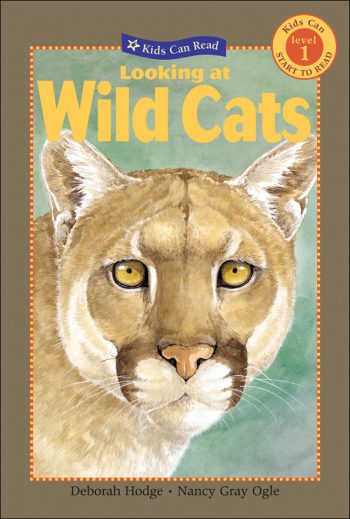
Looking at Wild Cats

Illustrated by Nancy Gray Ogle; published by Kids Can Press.

Kids can learn to read while finding out about cougars, lynx and bobcats. This non-fiction Level 1 first reader is interactive, with an eye-spy component at the beginning and a simple quiz at the end.

The book was created especially for beginning readers. Each page provides children with clearly written and simple facts about the fascinating wild cats of North America.

“… presents information in an accessible, research-friendly format that would be a great addition to a classroom or for early-reading animal lovers alike.” CM Magazine

“… a beautifully illustrated book for beginning readers. A fine resource for primary school teachers who want to enrich students’ information level.” National Science Teachers Association

Looking at Bears

Illustrated by Pat Stephens; published by Kids Can Press.

Kids can learn to read while finding out about grizzly bears, polar bears and black bears. This non-fiction Level 1 first reader is interactive, with an eye-spy component at the beginning and a simple quiz at the end.

The book was created especially for beginning readers. Each page provides children with clearly written and simple facts about the three fascinating species of bears in North America. (Check your library for a copy.)

• Year’s Best Books, Resource Links

A roaringly successful information gem for newly independent readers. Highly recommended.CM Magazine

Kids Book of Canadian Immigration

The Kids Book of Canadian Immigration

Illustrated by John Mantha; published by Kids Can Press.

Canada is a diverse land with a rich immigration history. Our roots begin with the Aboriginal peoples who have lived here since time immemorial and extend to the wide array of newcomers who have arrived over hundreds of years from almost every part of the globe. People from more than 200 cultures now call Canada home — and each one has a fascinating story to tell. Many of their stories, past and present, and their amazing contributions to this country are told in these pages.

Featuring stories of ethnic groups, mini-profiles, maps, archival documents and first-person accounts, this richly illustrated title is a celebration of multicultural Canada and a comprehensive look at our fascinating immigration history. (Check your library for a copy.)

• Information Book Award, Honour Book, Children’s Literature Roundtables of Canada
• Christie Harris Illustrated Children’s Literature Prize, Finalist, BC Book Prizes
• Honor Book in Social Studies: K-6, Society of School Librarians International
• Our Choice starred selection, Canadian Children’s Book Centre
• Best Books for 2007, Resource Links

“This outstanding book takes readers on a journey through time, helping them to understand the cultural makeup of this country… Well-researched and informative, with the added appeal of personal anecdotes, this book has a definite place in any school or public library.” Canadian Materials Magazine

“The text explores the subject thoroughly and from a variety of vantage points… Memorable for their frankness are the first-person accounts from a group of young people ranging in age from 11 to 14, from countries like Russia, Ukraine and Chile. While each is delighted to be a new Canadian, many describe the losses and difficulties of all immigrants…” Globe and Mail

Savanna Animals

savanna animalsIllustrated by Pat Stephens; published by Kids Can Press.

The savanna is home to exciting animals whose bodies are suited to living on the warm, grassy plain. Elephants, giraffes, lions, meerkats, zebras and other animals have special ways of finding food, raising families and protecting themselves in this habitat with long dry seasons and shorter rainy seasons.

Read about:
• the black mamba who is the fastest snake in the world
• the lion, a fierce hunter with powerful jaws and razor-sharp teeth
• the giraffe who stands as tall as a two-storey building

Who Lives Here?

This series looks at animals in their natural habitats – rain forests, polar regions, deserts and wetlands – and explains how the body and habits of each animal are suited to the place it lives. Charming, realistic illustrations, playful language and intriguing facts make these books a perfect read for young children.

“Highly Recommended!” National Science Teachers Association

savanna animals

Wetland Animals

wetland animalsIllustrated by Pat Stephens; published by Kids Can Press.

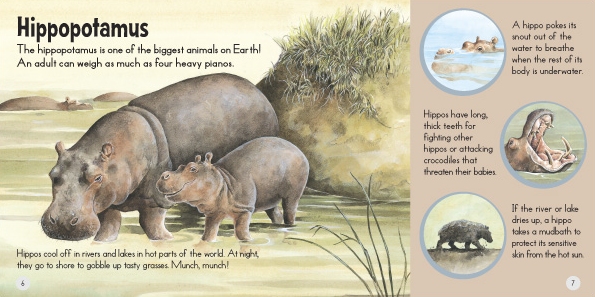
Wetlands are home to amazing animals whose bodies are built for living in or near the water. Hippos, crocodiles and anacondas all have special ways of finding food, staying safe and raising their young in a watery habitat.

Read about:
• the hippopotamus who weighs as much as four heavy pianos
• the bullfrog who takes in water through its skin instead of drinking
• the crocodile, a fierce hunter who roars like a lion

Who Lives Here?

This series looks at animals in their natural habitats – rain forests, polar regions, deserts and wetlands – and explains how the body and habits of each animal are suited to the place it lives. Charming, realistic illustrations, playful language and intriguing facts make these books a perfect read for young children.

“Highly Recommended!” National Science Teachers Association

wetland animals

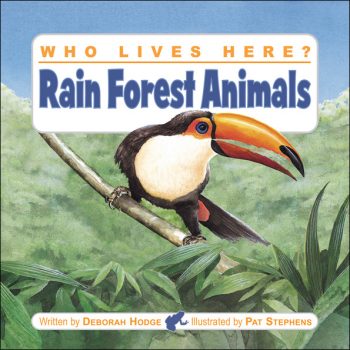
Rain Forest Animals

rain forest animalsIllustrated by Pat Stephens; published by Kids Can Press
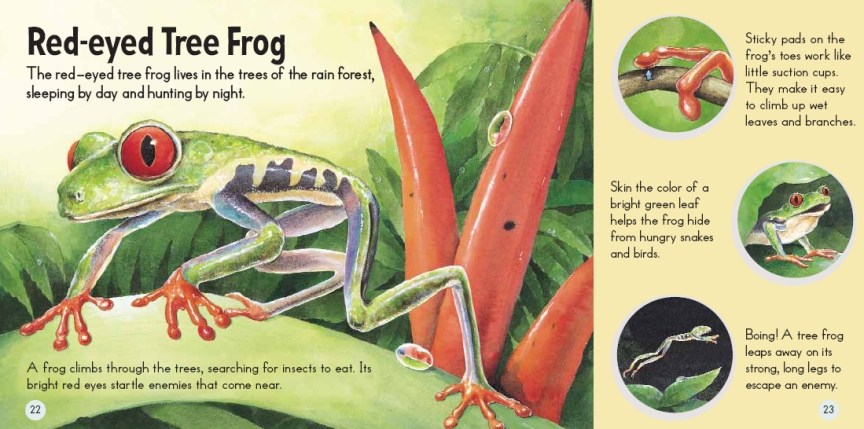
The rain forest is home to amazing animals whose bodies are built for living among the tall trees and lush green plants. Toucans, emerald tree boas and jaguars all have special ways of finding food, staying safe and raising their young in a warm, wet tropical forest.

Read about:
• the sloth who eats and sleeps hanging upside down in a tree
• the gorilla who beats its chest like a drum to scare away its enemies
• the jaguar who kills its prey with one ferocious bite

Who Lives Here?

This series looks at animals in their natural habitats – rain forests, polar regions, deserts and wetlands – and explains how the body and habits of each animal are suited to the place it lives. Charming, realistic illustrations, playful language and intriguing facts make these books a perfect read for young children.

“Highly Recommended!” National Science Teachers Association

rain forest animals

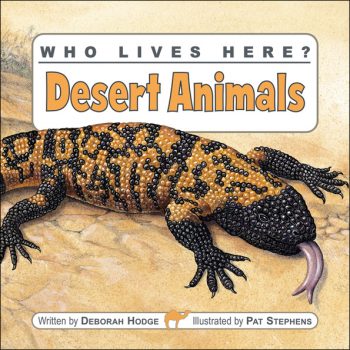
Desert Animals

desert animalsIllustrated by Pat Stephens; published by Kids Can Press

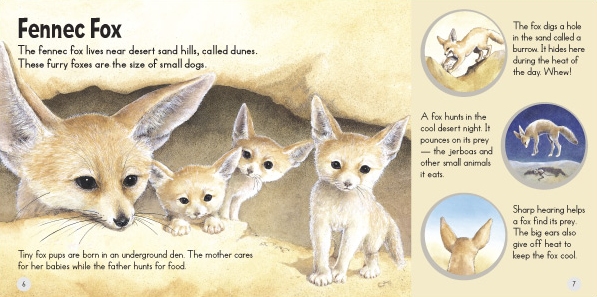
Deserts are home to amazing animals whose bodies are built for living in hot places, where there is very little water to drink. Scorpions, sand cats and camels all have special ways of staying cool, finding food and raising their young in a hot, dry habitat.

Read about:
• the sidewinder snake who rattles its tail to scare away enemies
• the sand cat whose furry paws protect it from the burning sand
• the Bactrian camel who can drink enough water to fill a bathtub

Who Lives Here?

This series looks at animals in their natural habitats – rain forests, polar regions, deserts and wetlands – and explains how the body and habits of each animal are suited to the place it lives. Charming, realistic illustrations, playful language and intriguing facts make these books a perfect read for young children.

“Habits as well as habitats, prey as well as predators, are presented in word and picture in an engaging and appropriate way for the books’ intended audience.” Globe and Mail

desert animals

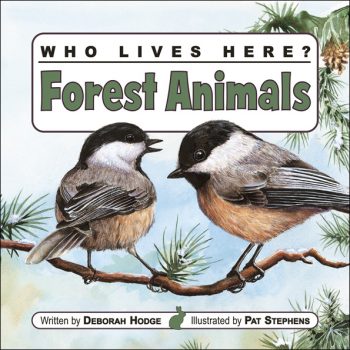
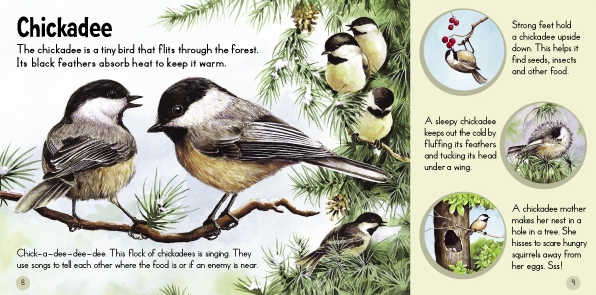
Forest Animals

forest animalsIllustrated by Pat Stephens; published by Kids Can Press
The forest is home to amazing animals whose bodies are built for living among the trees in cold weather. Black bears, wolverines, loons and other animals all have special ways of keeping warm, finding food and raising their young in a forest habitat with lakes and rivers, short summers and long winters.

Read about:
• The snowshoe hare who runs as fast as a car on a city street
• The wolverine who can crush bones with its powerful jaws
• The wood frog whose body freezes like an ice cube in winter

Who Lives Here?

This series looks at animals in their natural habitats – rain forests, polar regions, deserts and wetlands – and explains how the body and habits of each animal are suited to the place it lives. Charming, realistic illustrations, playful language and intriguing facts make these books a perfect read for young children.

“There are thousands of books out there about animals. This one stands out for its carefully chosen details, minimalist text, and engaging illustrations.” Quill & Quire

forest animals